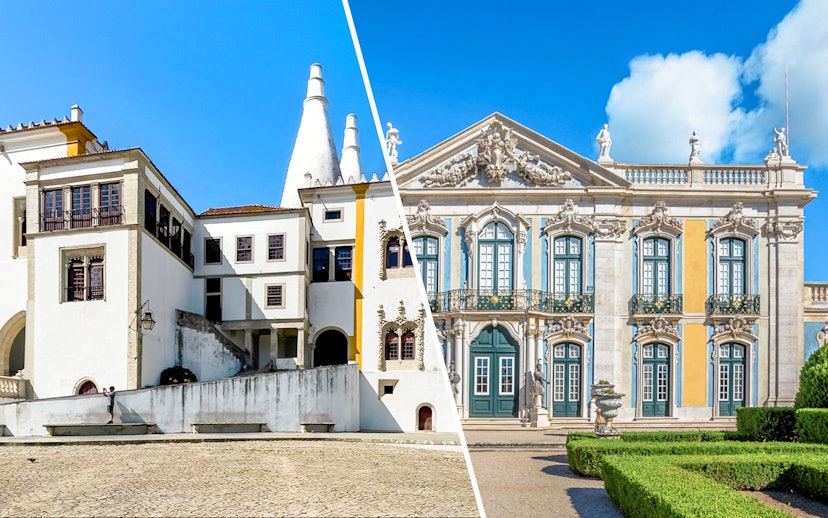
How to visit National Palace of Queluz
The National Palace of Queluz is an 18th-century royal palace best known for its ornate state rooms and formal gardens just outside Lisbon. This is not a huge, all-day palace complex, but it rewards a little planning because the interiors, upper gardens, and quieter corners are easy to rush past if you move straight through. The difference between an average visit and a memorable one is usually pacing: do the palace rooms first, then slow down in the gardens with a map or audio guide. This guide covers the practical details that help.
Quick overview: National Palace of Queluz at a glance
If you want the short version before you book, start here.
- When to visit: A quieter visit usually means starting with the palace interiors before most garden strolls and tea breaks slow the pace later in the visit.
- Getting in: Standard entry is available with the Headout ticket options listed below, including entry-only and audio guide variants, and booking ahead makes more sense if you want the app-based tour and offline maps ready before arrival.
- How long to allow: 2–3 hours works for most visitors, with extra time worth adding if you want both the palace interiors and a slower walk through the gardens, canal, and upper garden sections.
- What most people miss: The upper gardens, tiled canal, and smaller landscaped areas are easy to skip after the palace rooms, but they add much of the site’s character.
- Is a guide worth it? Yes, if you want room-by-room context and navigation help without joining a group; a good audio guide is usually enough here because the site is manageable at your own pace.
🎟️ See ticket options for the National Palace of Queluz below before your preferred entry time is gone.
Jump to what you need
🕒 Where and when to go
🗓️ How much time do you need?
🎟️ Which ticket is right for you?
👑 What to see
♿ Facilities and accessibility
Where and when to go
How do you get to the National Palace of Queluz?
The palace is in Queluz, within the Sintra municipality, about 30km from Lisbon and usually visited as an easy half-day stop rather than a full Sintra circuit.
Largo Palácio de Queluz, 2745-191 Queluz, Portugal
→ Open in Google Maps
- Train: Queluz-Belas station → about 15 min on foot → suburban trains from Lisbon make this the most practical car-free option.
- Taxi / rideshare: Drop-off near the palace entrance → shortest walk → useful if you want to avoid the station-to-palace uphill sections.
- Car: Driving from Lisbon → about 30–40 min depending on traffic → easier for combining Queluz with other Sintra-area stops.
Full getting there guide
Which entrance should you use?
The setup is straightforward, and most visitors get caught out less by the entrance itself than by arriving without their ticket or audio guide ready on their phone.
- Main entrance: Located at the front of the palace complex. Best for all visitors. Expect short waits outside of busy holiday periods.
Full entrances guide
When is the National Palace of Queluz open?
- When is it busiest? Late morning through early afternoon usually feels busier because many visitors pair the palace with a Lisbon or Sintra day trip and reach the site after transit.
- When should you actually go? A first-entry or early-morning visit gives you quieter palace rooms first, before visitors spread into the gardens and tea house.
How much time do you need?
| Note |
|---|
Most visits are under 3 hours, so use the duration guidance below instead. |
Which National Palace of Queluz ticket is best for you
| Ticket type | What's included | Best for | Price range |
|---|---|---|---|
Tickets to the National Palace of Queluz & Gardens | Entry to the National Palace of Queluz and Gardens + free audio guide in Portuguese, English, Spanish, and French | A straightforward self-paced visit where you want entry plus basic room-by-room context without relying on your own tour app | |
Queluz National Palace and Gardens Tickets with Audio Guide | Entry ticket + self-guided audio tour on Android and iOS + activation link + offline text, audio narration, and maps | A visit where you want navigation help, offline maps, and more structure while moving between the palace interiors and gardens |
How do you get around National Palace of Queluz?
The site is best explored on foot and is manageable in one visit, but it works better if you think of it as two parts: palace interiors first, gardens second.
The main palace rooms are the natural starting point, with the gardens unfolding behind and around the building rather than as a separate attraction.
Getting around the palace and gardens
- State rooms: ceremonial interiors, decorated halls, and royal apartments → budget 45–60 min
- Music Hall and Ambassador’s Room: two of the most memorable interior spaces → budget 20–30 min
- Chapel: ornate religious space that many visitors pass too quickly → budget 10–15 min
- Gardens and tiled canal: formal paths, fountains, and photo stops → budget 45–60 min
- Upper gardens: Hanging Garden and Malta Garden reached by ramp access → budget 20–30 min
Suggested route: Start with the royal rooms while your attention is fresh, move through the Chapel and Ambassador’s Room before the gardens, and save the canal and upper garden sections for last — they’re where many visitors shorten the visit once they think they’ve already ‘done’ the palace.
Maps and navigation tools
- Map: app-based and offline maps are included with the Headout audio guide ticket → download before arrival for the easiest self-guided route.
- Signage: enough for a basic visit, but a map helps if you want to connect the palace interiors with the upper gardens without backtracking.
- Audio guide / app: free audio guide is available in Portuguese, English, Spanish, and French on one ticket option, and the app-based self-guided version includes offline narration and maps.
- Large outdoor POIs only: not applicable.
💡 Pro tip: Download your audio guide and maps before you arrive — the app works best when everything is already loaded, and the venue may not have a phone-charging facility.
Get the National Palace of Queluz map / audio guide
Where are the masterpieces inside National Palace of Queluz?

Ambassador’s Room
Room type: Ceremonial hall
This is one of the palace’s grandest interiors and the room that best conveys the formal, diplomatic side of court life. Slow down here for the scale, mirrored finishes, and symmetry rather than just the first photo stop. What many visitors miss is how the room was designed to impress as much through layout and movement as decoration.
Where to find it: Inside the main palace route among the principal state rooms
Music Hall
Room type: Performance and reception space
The Music Hall gives the palace a lighter, more intimate feel than the grand ceremonial rooms around it. It’s worth lingering for the decorative detail and for the sense of how entertainment fit into royal life. Many visitors move through quickly because it feels smaller, but that change of scale is part of what makes it memorable.
Where to find it: On the main interior route through the palace apartments and reception rooms
Princess’s Apartments
Room type: Royal living quarters
These rooms are one of the best places to understand the palace as a lived-in royal residence rather than just a sequence of ornate halls. They reward slower viewing because the detail is more domestic and layered. The easy thing to miss here is the shift in mood from public display to private life.
Where to find it: Within the residential sections of the palace interiors
Chapel
Era: Historic religious interior
The Chapel is often overshadowed by the more lavish reception rooms, but it adds a different tone to the visit and breaks up the palace route in a useful way. Look beyond the altar and take in the decorative finish across the whole space. Visitors often rush through because it feels like a transition room, when it’s really one of the more atmospheric interiors.
Where to find it: Along the main palace interior circuit
Tiled canal
Feature type: Garden and landscape design
This is one of the garden features that gives Queluz its distinct personality and is worth saving enough time for after the interiors. It’s less about a single viewpoint and more about how the formal landscaping opens out around it. Many people miss it because they stop after the nearest garden paths and never continue deeper.
Where to find it: In the formal gardens behind the palace
Hanging Garden and Malta Garden
Feature type: Upper garden sections
These upper gardens add variety to the visit and are where the palace starts to feel more spacious and less room-focused. They’re especially worth your time if you want a calmer end to the route after the decorated interiors. Visitors often skip them simply because they don’t realize the gardens continue upward.
Where to find it: In the upper garden area, with ramp access available
Facilities and accessibility
- 🎧 Audio guide: A free audio guide is available in Portuguese, English, Spanish, and French with one Headout ticket option.
- 📱 Self-guided app: The app-based audio guide ticket includes offline text, narration, and maps for Android and iOS devices.
- 🍽️ Tea house / café: A tea house in the gardens is a practical stop for tea, coffee, and Portuguese pastries during a slower visit.
- 🔌 Phone charging: The venue may not have a smartphone charging facility, so arrive with a fully charged phone if you’re using the app.
- 🎧 Earphones: Bring your own earphones for the best experience with the app-based audio guide.
- ♿ Wheelchair-friendly access: The venue is listed as wheelchair accessible.
- ♿ Mobility: The palace is wheelchair accessible, and ramp access is specifically available to the upper gardens, including the Hanging Garden and Malta Garden.
- 👁️ Visual impairments: Audio guides are available in several languages, which helps with spoken context.
- 🧠 Cognitive and sensory needs: A self-paced visit works well here because you can move between smaller palace rooms and quieter garden areas without following a fixed group schedule.
- 👨👩👧 Families and strollers: The site involves a fair amount of walking, but the gardens offer more space and flexibility for breaks than the interior palace route.
The palace works best for children who enjoy visual detail, open garden space, and a visit that mixes indoor rooms with outdoor wandering.
- 🕐 Time: Around 1.5–2 hours is usually realistic with younger children if you focus on the grand rooms and the main garden paths.
- 🏠 Facilities: The gardens are the most family-friendly part of the visit because they give children room to reset between interior rooms.
- 💡 Engagement: Turn the visit into a spotting game by looking for fountains, sculptures, tiled details, and the canal rather than trying to read every room in sequence.
- 🎒 Logistics: Bring water, a charged phone, and comfortable shoes, and avoid overpacking because the palace visit is easier when you can move freely.
- 📍 After your visit: The tea house in the gardens is the easiest low-effort stop if children need a snack before you leave.
Rules and restrictions
What you need to know before you go
- Entry requirement: You’ll need a valid entry ticket, and the app-based option works best if you activate and download the audio content before arrival.
- On-phone access: If you book the self-guided audio guide, bring your own earphones and arrive with a fully charged phone because charging facilities may not be available.
- Visit setup: This is a self-paced visit, so comfortable shoes help because the palace and gardens together involve more walking than the interiors alone.
Not allowed
- 🚫 Food and drink: Eating and drinking are not allowed inside the palace and gardens.
- 🚬 Smoking: Smoking is not allowed inside the palace and gardens.
- 🐾 Pets: No animals are allowed inside except guide dogs.
Photography
Photography is allowed at the National Palace of Queluz, which makes the gardens and decorated rooms especially rewarding for slower visits. Flash photography, tripods, and selfie sticks are not permitted, so plan for handheld photos only. If you’re using your phone throughout the visit, save battery for the garden sections as well as the interior rooms.
Practical tips
- Booking and arrival: If you want the app-based audio guide, download everything before you leave for the palace so you’re not troubleshooting activation, maps, or battery life at the entrance.
- Pacing: Do the decorated palace rooms first and save the gardens for later; if you reverse that order, it’s easier to lose time outdoors and rush the interiors.
- Crowd management: Earlier entry usually feels smoother here because the palace rooms are the tightest part of the visit, while the gardens absorb people better later on.
- What to bring or leave behind: Bring your own earphones, wear comfortable shoes, and keep your phone fully charged if you’re relying on the audio tour and offline maps.
- Food and drink: Don’t plan on snacking as you go because eating and drinking are not allowed in the palace or gardens; if you want a break, build in time for the tea house instead.
- Photography: Save your best photo time for the gardens and canal, but remember you’ll need to shoot handheld because flash, tripods, and selfie sticks are not allowed.
What else is worth visiting nearby?
Commonly paired: Sintra National Palace
Why people combine them: Both work well on the same day if you want to compare different royal residences without committing to the steepest, longest Sintra circuit.
Pena Palace
Why people combine them: Visitors often pair Queluz with Pena Palace for contrast — Queluz is more intimate and decorative, while Pena is the more dramatic hilltop stop.
Moorish Castle
Worth knowing: This makes more sense if you’re already continuing deeper into Sintra and want an outdoor, viewpoint-heavy stop after the palace interiors.
Eat, shop and stay near National Palace of Queluz
- On-site: The tea house in the gardens is the easiest option for tea, coffee, and Portuguese pastries, and it works best as a mid-visit pause rather than a full meal.
- Better options nearby: Information unavailable.
- 💡 Pro tip: Eat before you arrive or plan a proper meal after your visit, because food and drink are not allowed inside the palace and gardens and the tea house is best for a light stop.
- Shopping nearby: Information unavailable.
Queluz is practical for visiting the palace, but it usually isn’t the best base for most travelers. The area works more as a stop between Lisbon and Sintra than as the place you build your trip around. If you want more dining, hotel choice, and easier sightseeing logistics, you’ll usually do better elsewhere.
- Price point: It generally makes more sense to stay where you already have better transport links rather than booking here just for one palace visit.
- Best for: Visitors who want a quieter base between Lisbon and Sintra, or who are traveling by car and prefer simpler day-trip logistics.
- Consider instead: Central Lisbon for a wider hotel and dining range, or Sintra if you’re planning multiple palaces and garden stops across more than one day.
Frequently asked questions about visiting National Palace of Queluz
Most visits take around 2–3 hours. That’s usually enough for the main palace rooms and a proper walk through the gardens, including time for photos and an audio guide. If you stop at the tea house or move slowly through the upper gardens, you may want closer to half a day.
Yes, booking in advance is the simpler option, especially if you want your audio guide set up before you arrive. Prebooking also lets you choose between a straightforward entry ticket and the app-based self-guided version with offline maps and narration.
Arriving 15–20 minutes early is a sensible buffer. That gives you enough time to sort out entry, open your ticket, and check your audio guide without eating into the visit itself. If you’re using the app-based guide, arrive with everything already downloaded.
A small day bag is the easiest option, but pack lightly. You’ll be walking through palace interiors and gardens, and food and drink are not allowed inside. If you’re using your phone for the audio guide, leave extra gear behind so moving between rooms stays easy.
Yes, photography is allowed. Flash photography, tripods, and selfie sticks are not permitted, so plan for handheld photos only. If you want the best mix of interior detail and outdoor shots, make sure your phone still has battery for the gardens.
Yes, groups can visit, but the site is best enjoyed at a measured pace rather than as a rushed stop. The palace rooms are more compact than the gardens, so larger groups should expect to move more smoothly if everyone has tickets and audio content ready before entry.
Yes, it works well for families if you keep expectations realistic. Most children do best with a shorter route through the interiors followed by time in the gardens, where there’s more space to move around. Plan around 1.5–2 hours if you’re visiting with younger children.
Yes, the venue is listed as wheelchair accessible. Ramp access is also available to the upper gardens, including the Hanging Garden and Malta Garden. The mix of palace interiors and outdoor paths still means it’s worth pacing the visit rather than trying to see everything quickly.
Yes, there is a tea house in the gardens for tea, coffee, and pastries. That said, eating and drinking are not allowed inside the palace and gardens themselves, so think of the tea house as your planned break rather than something to do while walking around.
Yes, bring your own earphones if you book the app-based audio guide. It makes the experience easier and more comfortable, especially if you want to move room by room without disturbing others. A fully charged phone matters too, since charging facilities may not be available.
No, pets are not allowed inside the attraction. The only exception listed is guide dogs. If you’re traveling with an animal, make arrangements before you arrive rather than assuming there will be a holding area on-site.