Budget 2 to 3 hours for the palace and main gardens, or closer to 4 if you use an audio guide slowly and linger in the outer garden paths. The visit is compact enough for a half-day, but the details reward a steadier pace than most first-timers expect.
Quick Information
ADDRESS
Largo Palácio de Queluz, 2745-191 Queluz, Portugal
RECOMMENDED DURATION
3 hours
Timings
09:00–18:00
TICKETS
From $15.68
Did you know?
The palace began as a summer residence for Dom Pedro of Braganza, later King Pedro III, and Queen Maria I in the mid-18th century as a country retreat between Lisbon and Sintra.
A fire in 1934 caused major damage at Queluz. Some interiors seen today are careful reconstructions based on historical records, according to Visit Portugal.
The Canal dos Azulejos was not just decorative: it once hosted boat rides for the royal court along its long, narrow waterway lined with tile panels.
Is National Palace of Queluz worth visiting?
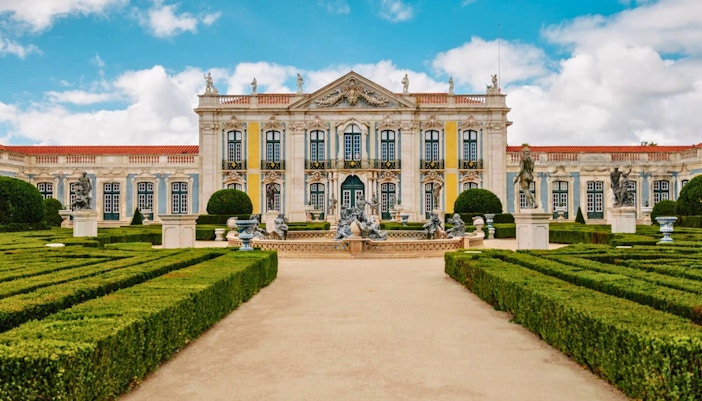
You feel Queluz before you understand it: clipped hedges, pale stone, tiled fountains, and rooms that shift from formal to almost theatrical in a few steps. The palace is intimate by royal standards, which makes the mirrored halls and painted ceilings feel even more personal.
It was built in the 18th century as a pleasure palace for Dom Pedro, later Pedro III, and expanded to project dynastic confidence without the scale of a capital-city court. That balance of retreat and ceremony is why the place still feels both grand and lived in.
The payoff is seeing how royal life moved between choreography and comfort. At Queluz, the state rooms, music spaces, and gardens read as one connected stage set, so you leave with a sharper sense of how power was performed in private.
Skip it if: you only have 1 hour and want a dramatic hilltop landmark.
What to see at the National Palace of Queluz?
1/7
Ceremonial forecourt
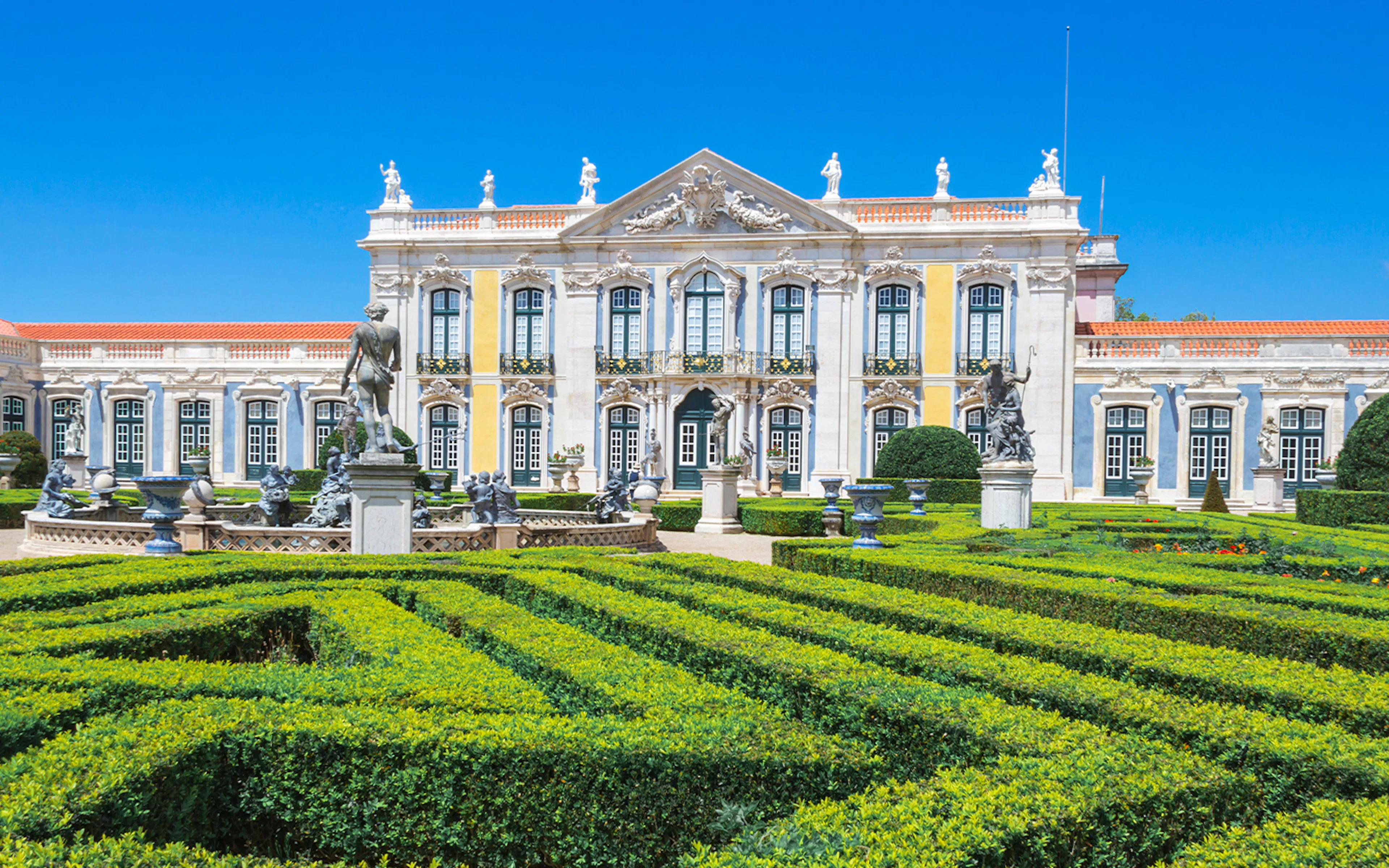
The curved entrance court sets the tone immediately: controlled symmetry, pale facades, and a palace designed for arrival as performance. Pause here before entering; it helps the interiors make visual sense.
Hall of the Ambassadors
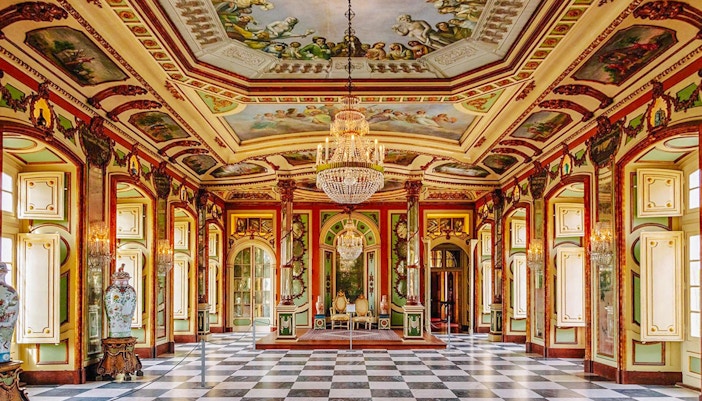
One of the palace’s most formal rooms, used for receptions and protocol. The mirrors, gilded decoration, and painted ceiling make it a quick anchor space, and most self-guided visits naturally slow down here.
Music Room
A lighter, more intimate room that reveals Queluz at its most sociable. This is where the palace feels less like a monument and more like a lived royal residence shaped by entertainment.
Princess’s Apartments
These rooms bring scale back down after the grand halls. Pay attention to how private quarters still carry ceremony in the wall decoration, furniture layout, and controlled views toward the gardens.
The chapel
Richly decorated but compact, the chapel shows how religion was folded into court life rather than separated from it. Look closely at the altarpieces and ornamental detail instead of rushing through.
Tiled canal and fountains
Outside, the long azulejo-lined canal is the signature garden feature. Give it time rather than treating it as a backdrop; the palace-garden relationship is one of Queluz’s main reasons to visit.
Upper gardens
The Hanging Garden and Malta Garden add quieter paths, clipped greenery, and changing sightlines back to the palace. If you’re using an audio guide, the offline maps help here more than inside.
How to explore the National Palace of Queluz
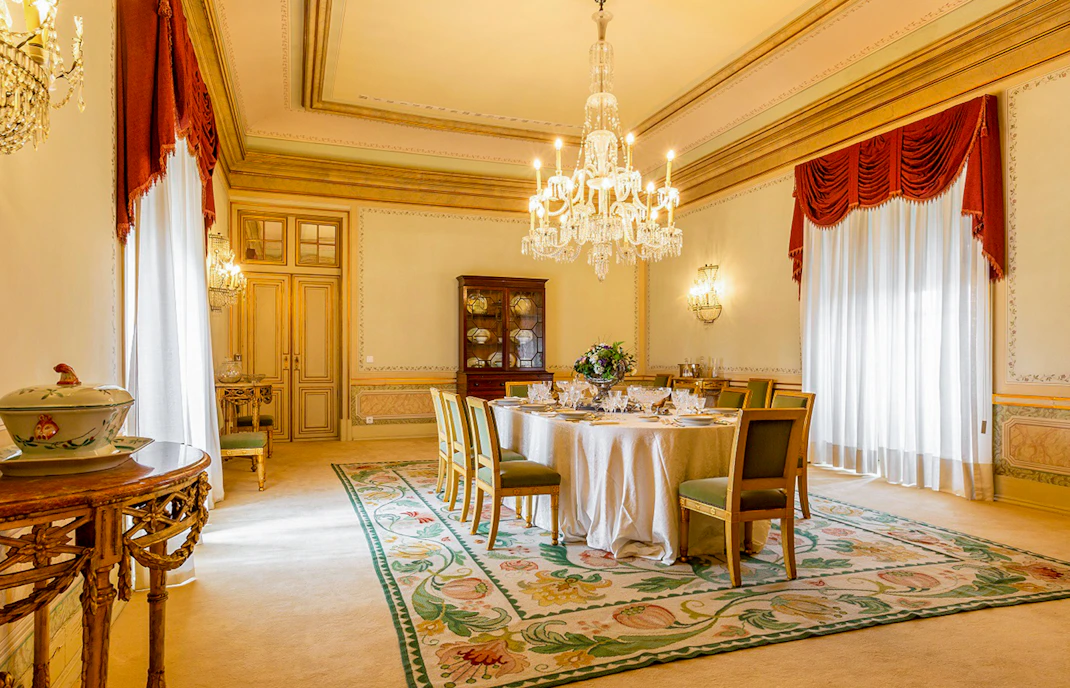
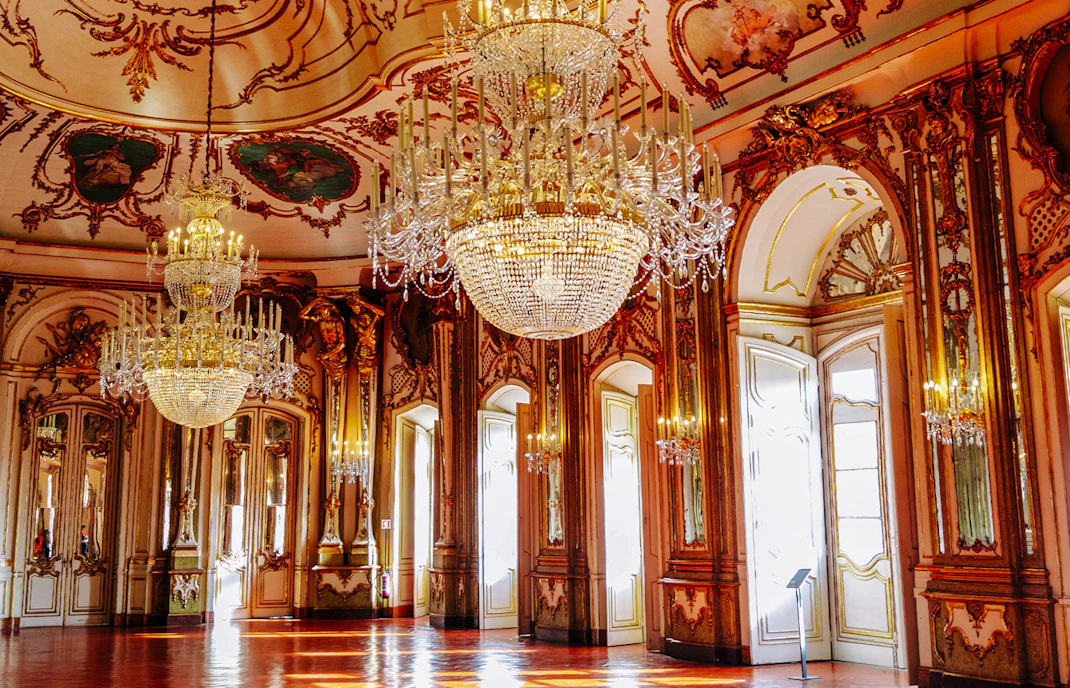
Start in the forecourt, then move through the ceremonial rooms before the lighter, more private apartments; seeing the formal sequence first makes the shift in scale easier to read. Save the gardens for the second half of your visit, when the tiled canal, fountains, and upper garden paths feel like a release after the decorated interiors.
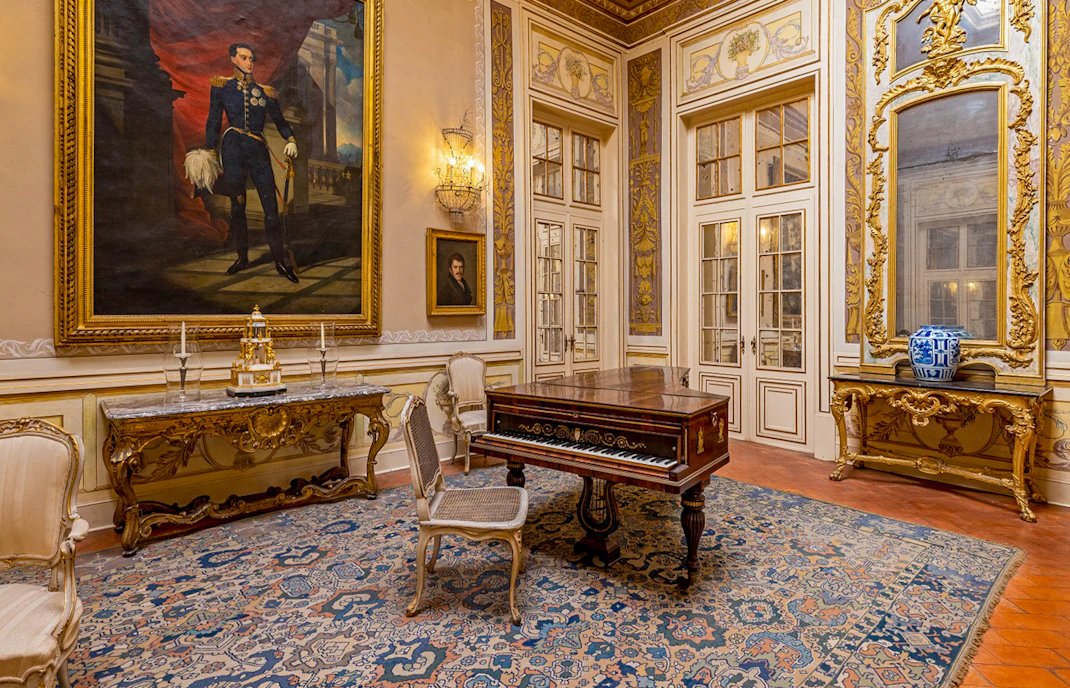
Must-see: Hall of the Ambassadors, Music Room, Princess’s Apartments, and the azulejo canal. Optional: the upper gardens and quieter botanical areas, which add 30–45 minutes and give you better sightlines back to the palace.

Self-paced works well here because the route is intuitive, and Queluz Palace audio-guided tickets add maps and room context. Guidance matters most if you want the court politics and symbolism behind the rooms, not just the visual detail.
- 1747: Construction begins on a former royal retreat for Infante Dom Pedro, later Pedro III, under architect Mateus Vicente de Oliveira.
- 1758: French architect Jean-Baptiste Robillon expands the project, giving Queluz much of its Rococo character and refining the palace-garden composition.
- 1760: Pedro marries the future Queen Maria I, and Queluz becomes an important suburban residence for the royal family.
- 1777: When Maria I and Pedro III ascend the throne, the palace takes on greater ceremonial importance.
- 1794: After a fire at the Ajuda Royal Palace, Queluz becomes one of the crown’s principal residences.
- 1807: The Portuguese court leaves for Brazil during the Napoleonic invasions, marking the end of Queluz’s peak court life.
- 20th century: Restoration campaigns preserve the palace and open it as the monument visitors experience today.
Architecture of the National Palace of Queluz
Style: Late Baroque and Rococo, softened by Neoclassical touches. From the forecourt to the salons, the palace feels ornamental rather than defensive — built for display, music, and court ritual.
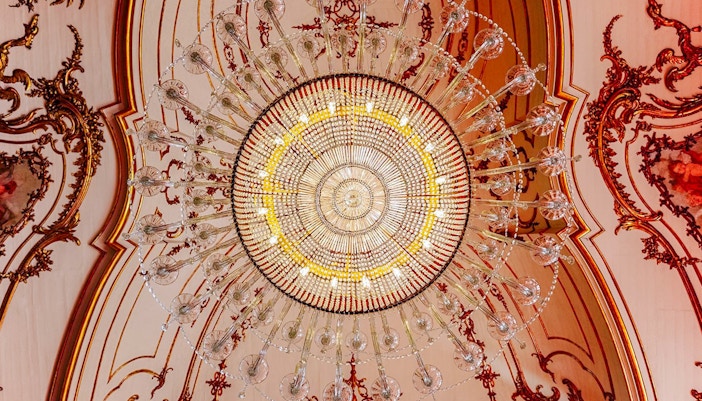
Materials: Stucco, carved wood, gilding, marble, and azulejo tiles shape the experience. Inside, light catches mirrors and painted surfaces; outside, water and tile carry decoration into the gardens.
Layout: Queluz’s long sequence of rooms opens gradually toward terraces and garden axes. The design links indoor ceremony with outdoor movement, so the palace never feels detached from its landscape.
On the ground: The most memorable detail is the shift in scale. Grand reception rooms give way to more intimate apartments, which makes royal life here feel staged, but still recognizably domestic.
Architects: Mateus Vicente de Oliveira began the palace, and Jean-Baptiste Robillon refined its Rococo identity. Together, they created a residence that translated European court taste into a specifically Portuguese setting.
Who built National Palace of Queluz?
Commissioned by Infante Dom Pedro, later Pedro III, Queluz was first designed by Mateus Vicente de Oliveira and then shaped decisively by the French architect Jean-Baptiste Robillon. Their ambition was not a fortress or state palace, but a refined royal retreat where architecture, gardens, ceremony, and leisure worked as one composition.
A palace that still serves the state
Unlike many former royal residences that function only as museums, Queluz still has a living state role. The Pavilhão Dona Maria, one wing of the complex, serves as Portugal’s official residence for visiting heads of state. That changes how the palace reads: this is not just an 18th-century shell preserved for tourism, but a place that still participates in modern ceremony. It also helps explain the exceptional care given to the formal rooms and gardens, where the setting still carries real diplomatic weight.
Frequently asked questions about the National Palace of Queluz
Yes. Queluz is a strong pick if you want a royal palace with serious interiors but fewer crowds than Pena. An audio-guided ticket helps the rooms and gardens connect. See Tickets to the National Palace of Queluz.
Most visitors spend 2 to 3 hours. Plan closer to 4 if you want the upper gardens, a slower audio-guided visit, or time to sit with the decorative rooms instead of walking straight through. See the National Palace of Queluz.
Don’t skip the Hall of the Ambassadors, the Music Room, the Princess’s Apartments, and the azulejo canal. Those spaces show the full range of Queluz, court ceremony indoors, and controlled spectacle outdoors. See the visitor's guide for National Palace of Queluz.
Yes, for first-timers and families with children who can handle a walking visit. The gardens break up the interiors nicely, but younger children may move through the palace faster than adults using the audio guide. Book your ticket to the National Palace of Queluz.
Usually, yes if you want smoother entry and your audio guide ready on your phone. Independent visitors get the most from Queluz National Palace tickets with Audio Guide, especially for the offline maps and room-by-room narration inside.
Partly, yes. The palace is wheelchair accessible, and ramp access is available to upper garden areas including the Hanging Garden and Malta Garden. Plan your route ahead at the National Palace of Queluz if the gardens are a major part of the visit.